出生与感知结构形成
南京: 华山碑与色彩意识
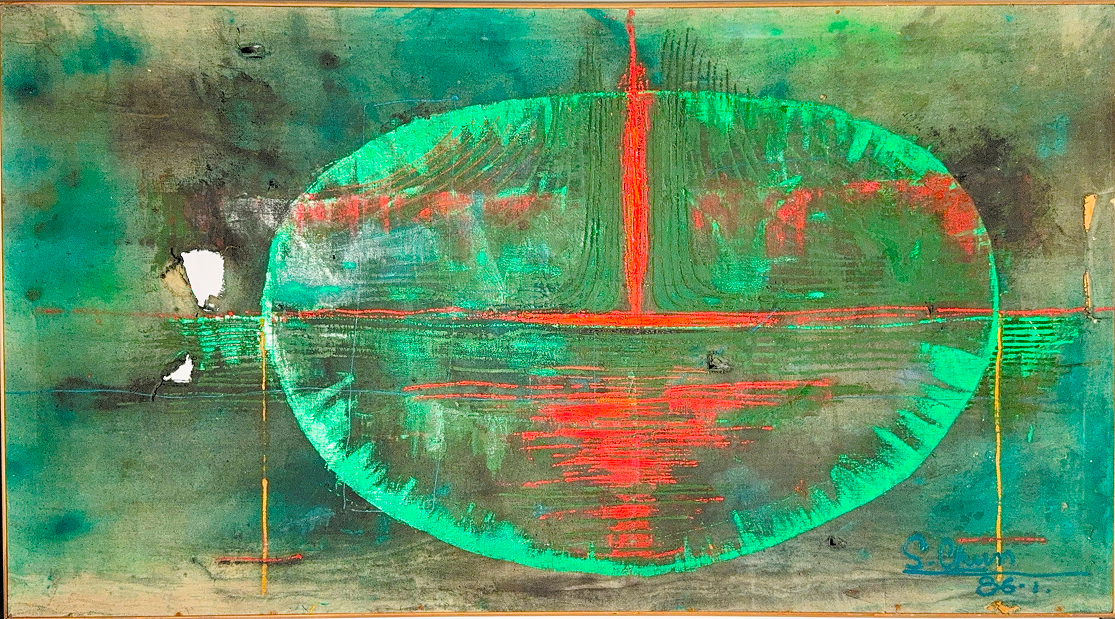
抽象油画探索: 结构意识初现
浙美考试: 整体结构的瞬间显现
抵达纽约
纽约与欧洲巡展:结构语言的国际验证
台北:节奏即结构
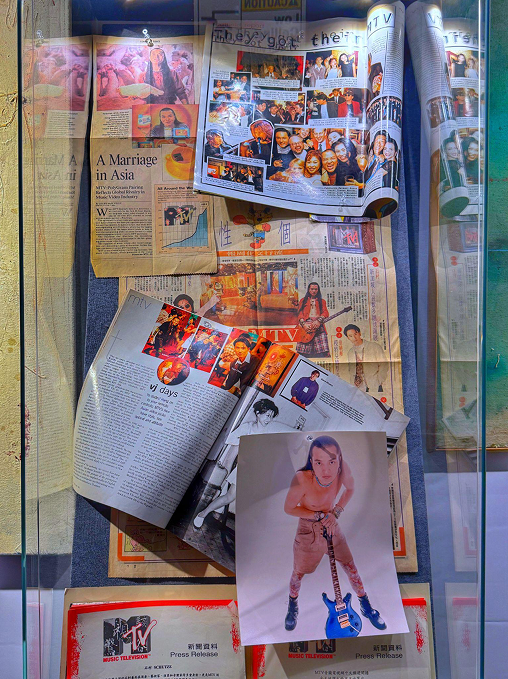
MTV亚洲:单位意识的媒介化经验
纽约 X 创意/工程阶段
人民币系列: 原始矩阵的出现
一美元: 纽约无墙美术馆
语言命名/无时间意识系统形成
跨媒介扩展:心流音乐
画书法: 重构《李白上阳台帖》
公共语境的扩展
Through December 14th


Born on February 4, 1963, in Nanjing, during a rare convergence of lunar and solar springs. His maternal lineage traces back to the Song Dynasty poet Su Dongpo.He spent his early childhood in rural Wuxi, where colors and the geometric order of Jiangnan architecture collectively formed the foundational structure of his sensory perception.
1963 年 2 月 4 日出生于南京,正值阴历与阳历交汇的双重春天;母亲家族为宋代文学家苏东坡之后。
幼年寄养于无锡乡村,四季更替的色彩、层叠的稻田结构,以及江南建筑克制而清晰的几何秩序,共同塑造他最初的感知结构。
Returning to Nanjing, he began formal training in painting and calligraphy. He studied the Huashan Stele, a clerical-script tradition defined by the principle of “square on the outside, round within.” This extended study led to an understanding of line as weight, direction, and force.
A private art tutor recognized his acute sensitivity to color and regularly supplied him with oil-color tubes wrapped in newspaper, ensuring he never experienced material scarcity, laying the foundation for his later artistic language—marked by density, force, and freedom.
返回南京,开始系统学习绘画与书法。
长期临写隶书《华山碑》,其“外方内圆”的结构特征,是他首次理解线条的重心、方向性与内在力量。
美术启蒙老师察觉他对色彩的高度敏感,经常以报纸包裹颜料管送至家中,使他在创作初期从未经历材料匮乏,为日后厚涂、力度、自由并存的语言奠定基础。
The first fragments of STONECUBE consciousness emerge.
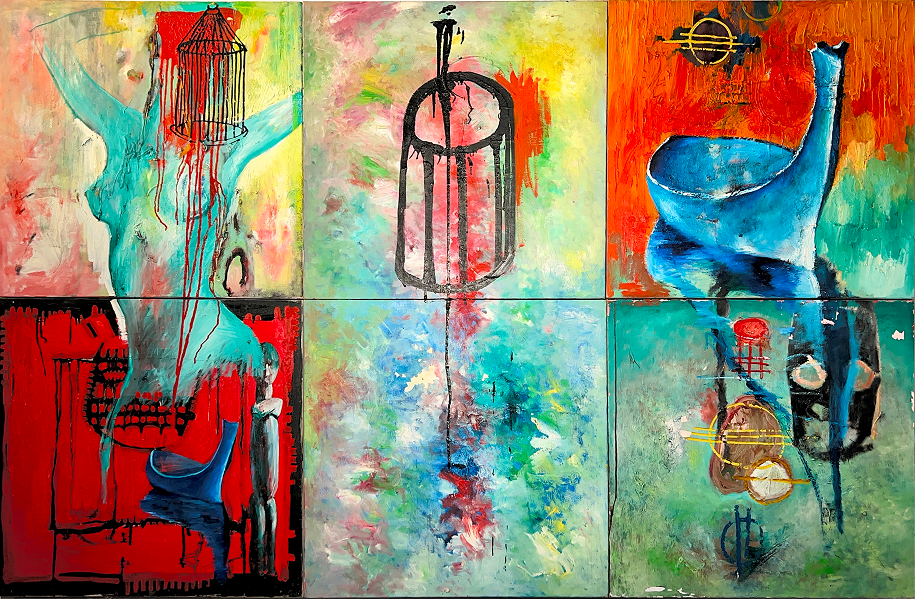
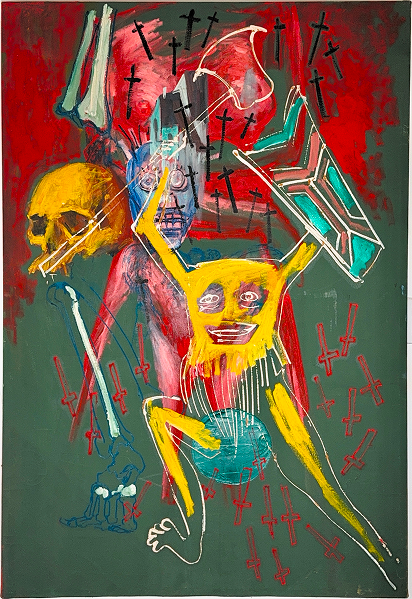
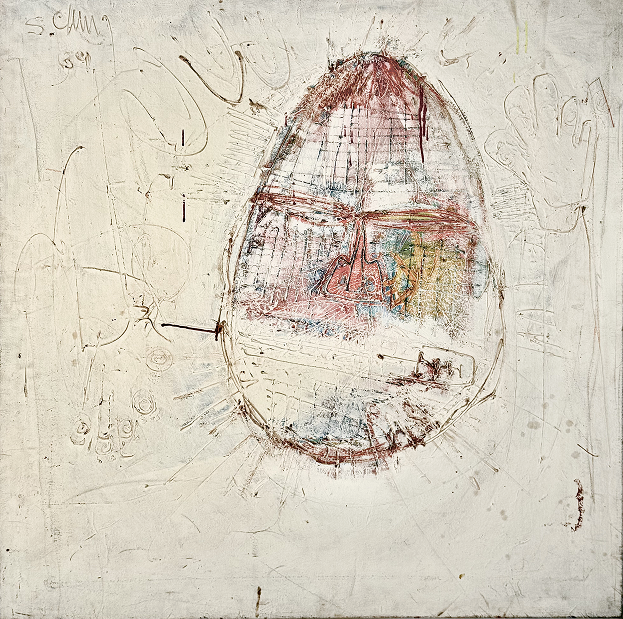
Among the earliest practitioners of abstract oil painting in Nanjing, he deliberately dismantled figuration and narrative, allowing structure itself to become the organizing principle of the image.
“石村块”意识的最初碎片开始浮现。
成为南京最早进行抽象油画实践的艺术家之一他主动解构具象与叙事,使结构成为画面的主导原则。
Completes a four-hour still-life in just ten minutes, ranking first in professional evaluation. Despite not being admitted due to academic requirements, this moment marked his first encounter with the sudden emergence of a holistic structure, an early precursor to what would later be described as the “No-Time” state.
在浙江美术学院入学考试中,仅用10 分钟完成规定4小时的静物写生,并获专业考试第一名。虽因文化课成绩未达到录取,但这一经历成为他首次进入“整体结构瞬间显现”的意识状态,其艺术直觉获得学院体系内专业教师的明确肯定。
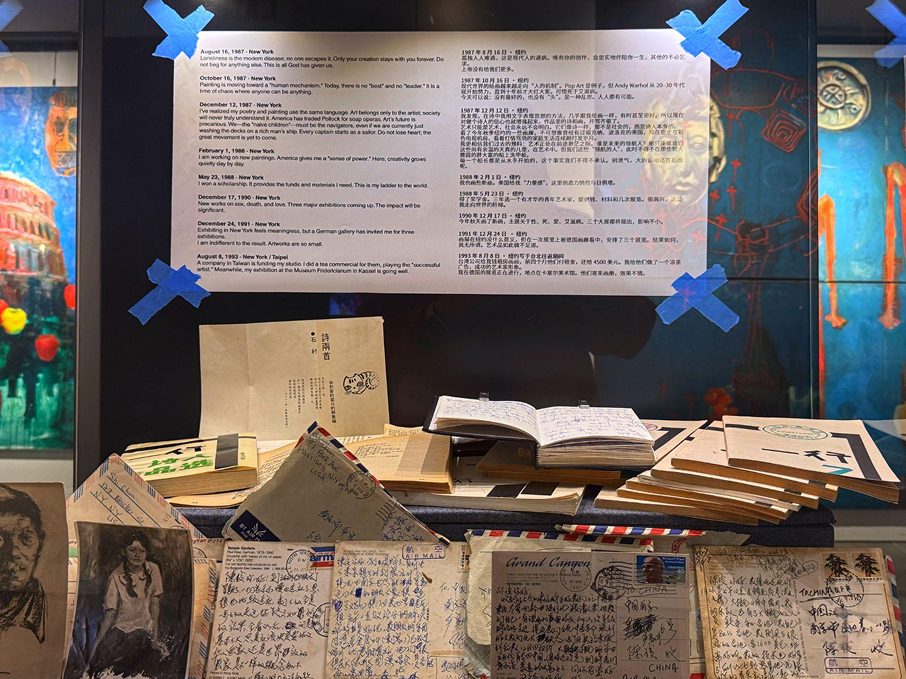
After relocating to New York, he immersed himself in the East Village’s avant-garde, cross-media art scenes, a period during which he began to discover his own artistic approach: structure outweighs subject matter.
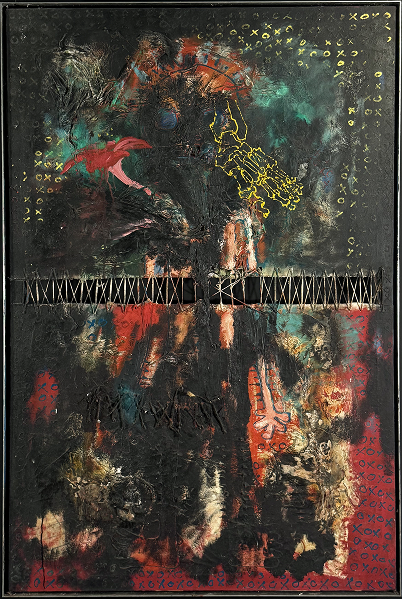
He began developing mixed-media works, embedding Eastern modes of perception within experimental artistic systems.
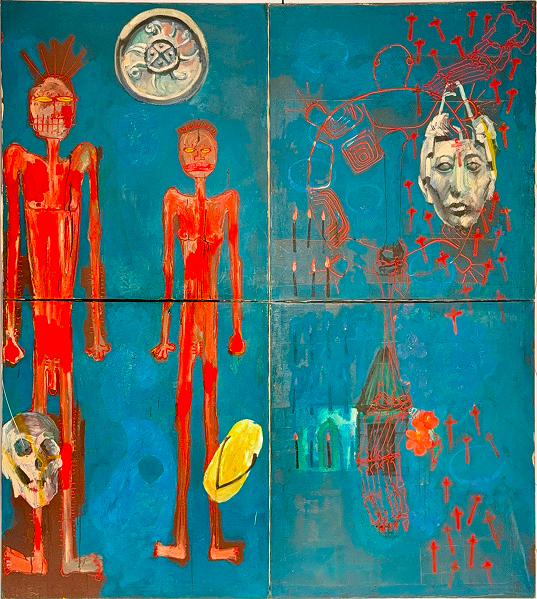
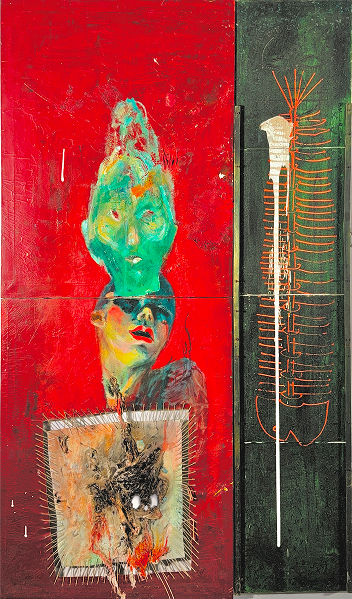
移居纽约后全面浸入当地先锋跨媒介艺术环境,首次清晰意识到“结构重于题材”。开始创作混合材料作品,将东方意识融入实验性的艺术系统之中。
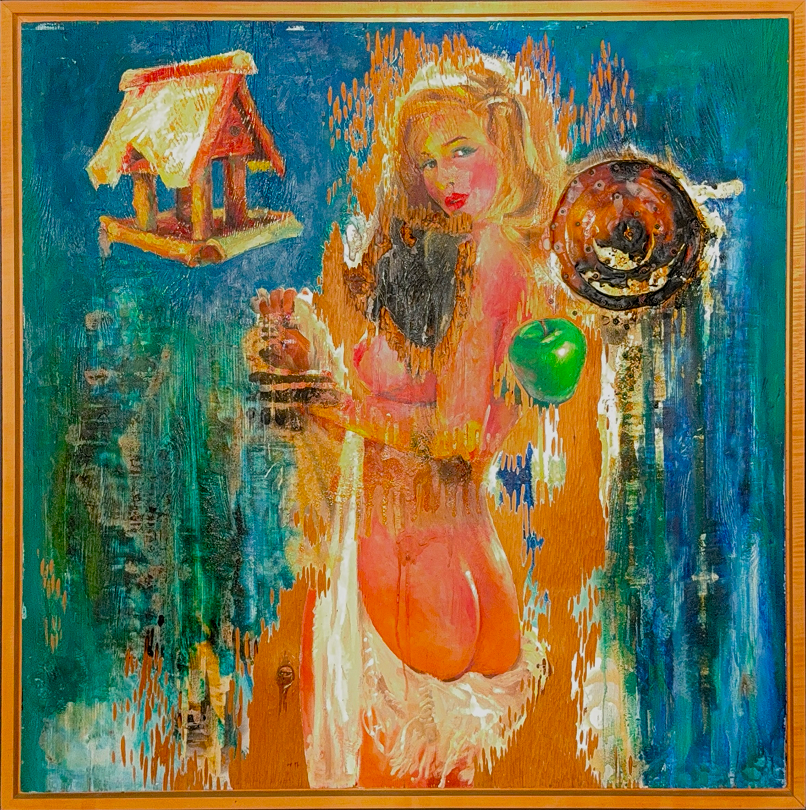
Exhibiting across New York and Europe, his artwork An Old Love Story entered The Grimm Brothers Museum collection.
Color was no longer used to represent images. Instead, it became a self-contained force, or what he calls “a unit of energy”, playing a central role in how the work was built and experienced.
作品于纽约及欧洲多地展出;《一个古老的爱情故事》被 Grimm-Museum 收藏。色彩不再作为再现工具,而被确立为独立的能量单位,转向以结构为主导的表达。
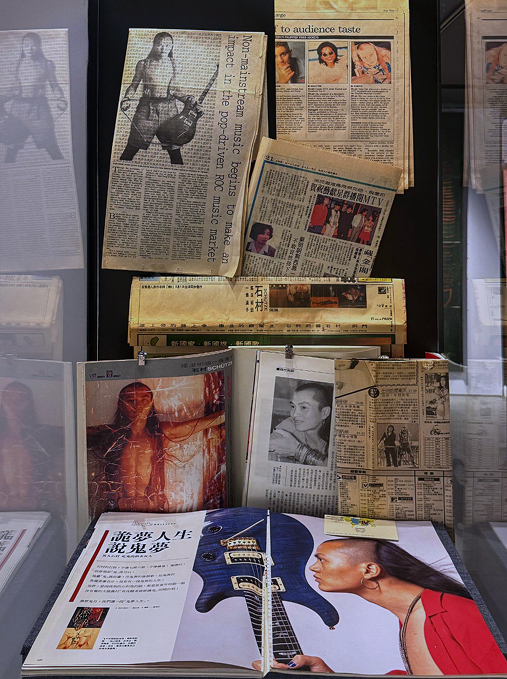
While based in Taipei, Shi emerged as a key figure within its avant-garde cultural landscape.
His “Neo People” commercial series, documenting his everyday life and artistic practice in New York, was broadcast across Taiwan and generated widespread cultural resonance.
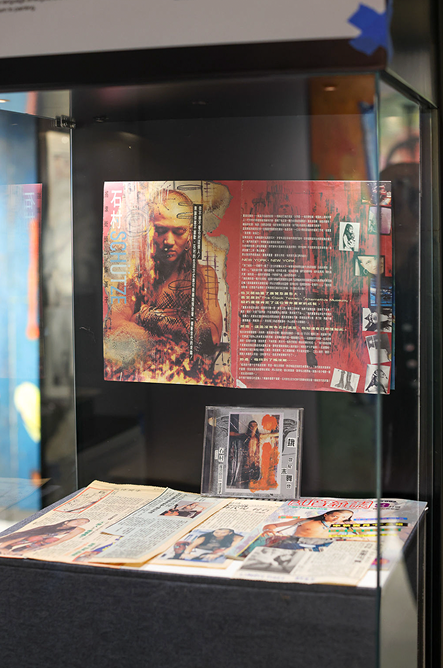
Concurrently, he releases a heavy-metal album and presents major solo exhibitions at two leading contemporary art galleries: Up Art Gallery and IT PARK.
在台北期间,迅速成为前卫文化语境中的重要人物。
“新新人类”广告系列以他在纽约的真实日常与创作状态为内容播出,在台湾引发广泛的社会与文化反响。
同期发行重金属摇滚专辑,并于阿普画廊与伊通公园举办个展。
Serving as a VJ for MTV Asia, he hosts three daily programs, including the English-language program Headbanger’s Ball.
Through high-speed editing and media segmentation, he recognizes that both images and attention are constructed from discrete units of energy such as pixels, an insight that would later become central to STONECUBE logic.
担任 MTV 亚洲部 VJ,每日主持三档节目,包括英文节目 Headbanger’s Ball。在高速剪辑与媒介分段的工作经验中意识到影像与注意力本身皆由离散的“单位”构成,这一认知随后成为石村块逻辑的核心基础。
Returning to New York, he produces the television program America in 60 Minutes and designs a series of structural prototypes through which he experimented with embedding his artistic ideas into functional forms. These cross-disciplinary practices accumulated into the conceptual groundwork of the STONECUBE system.
Observation of pixel structures on digital screens clarified images as assemblies of minimal units, an insight foundational to later work.
回到纽约制作电视节目《60 分钟看美国》,并展开一系列结构性原型的设计实践。
这些跨领域实践不断累积,逐步形成石村块系统的概念基础。
在数字屏幕中观察像素排列,明确意识到图像由最小单位构成,这一认知成为后续创作语言的关键基础。
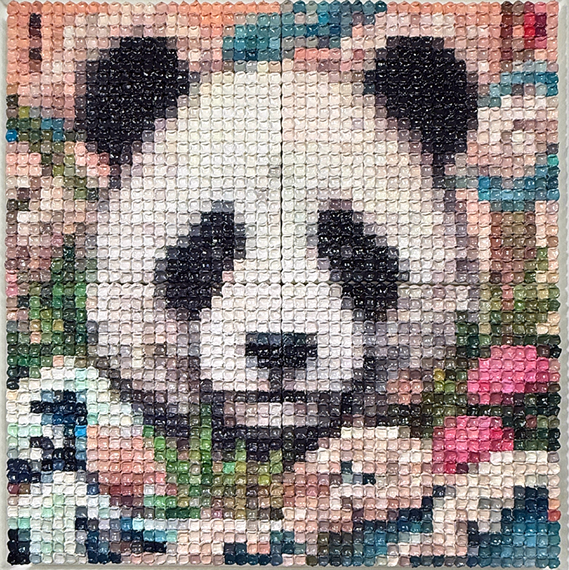
Creates six works in the RMB Series, reconstructing banknote imagery through a modular grid composed of 16,562 individually hand-mixed color units.In 2012, the series was featured as the opening subject of the nationally broadcast documentary Renminbi, marking his first major public introduction.
创作“人民币系列”六件作品,以 16,562 个手工调制的色彩方块重构纸币图像;2012 年作为纪录片《人民币》全国播出首集的开篇,首次进入大众视野。
Initiates ONE BUCK, a mobile installation project employing one-dollar paintings, transforming New York City into a “museum without walls.”
发起行为艺术项目“ONE BUCK:纽约无墙美术馆” ,以双面绘制的一美元钞票作为移动装置,将纽约市转化为实验性的“无墙美术馆。
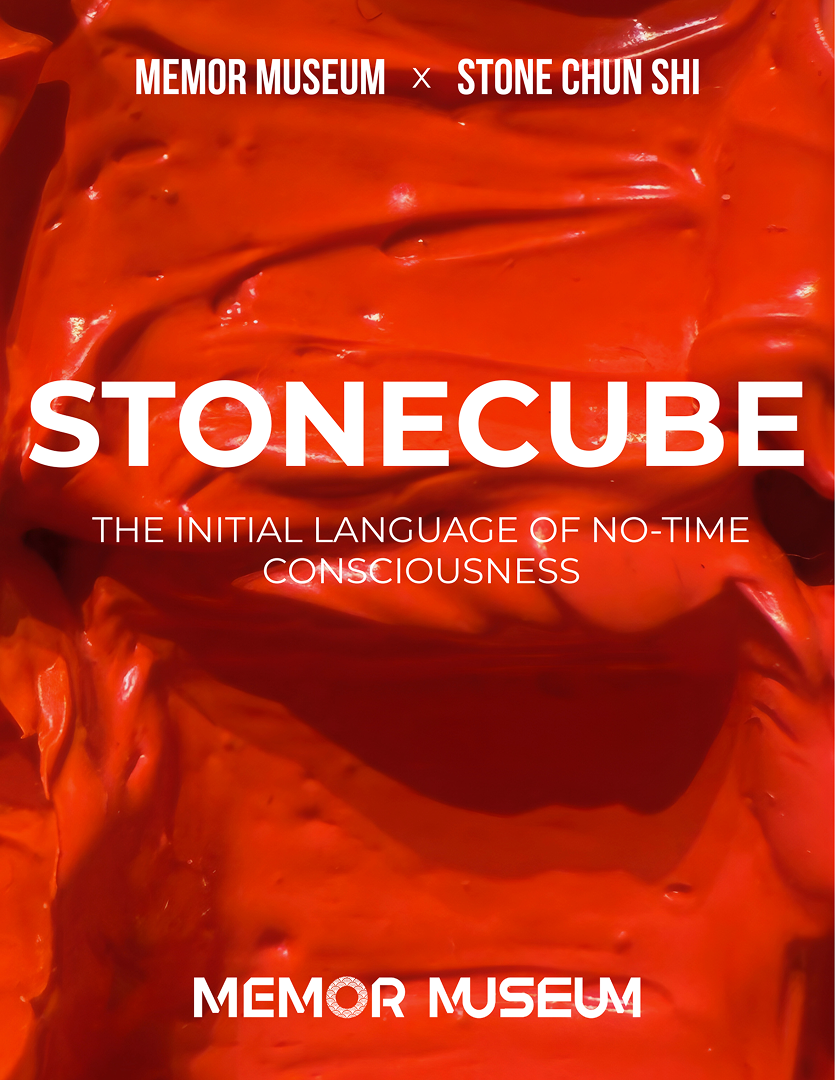
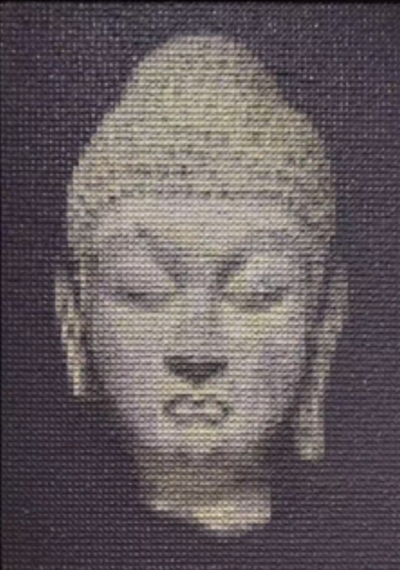
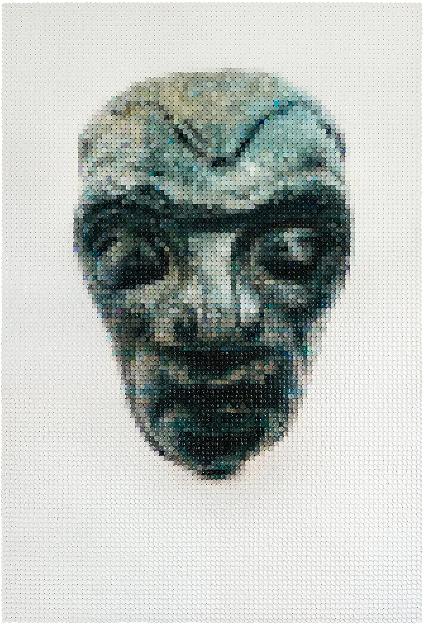
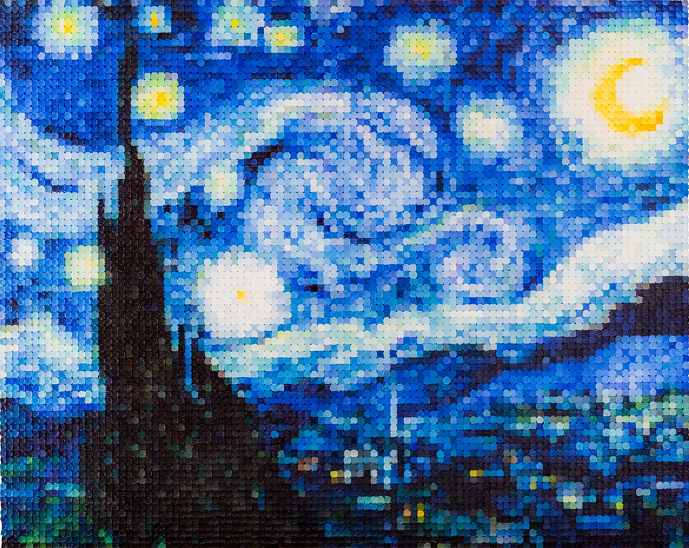
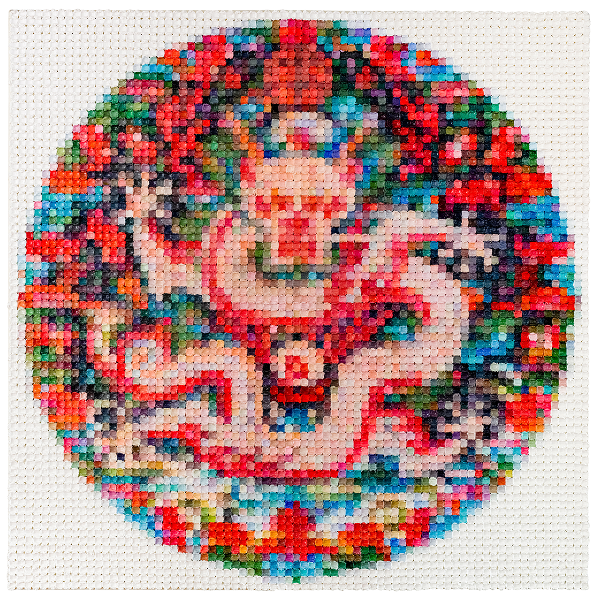
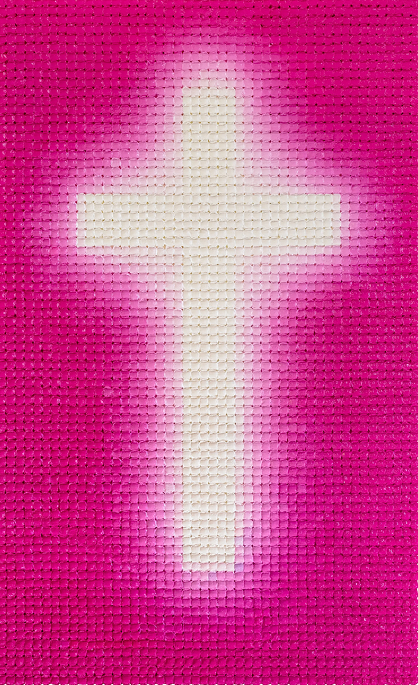
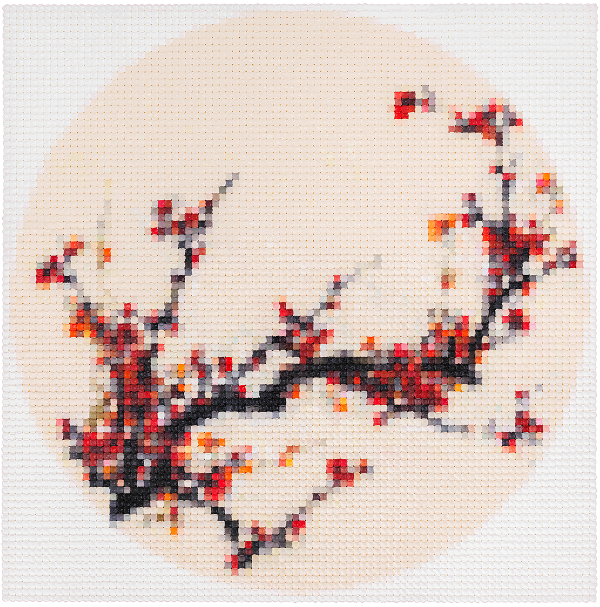
Formally named his artistic language “STONECUBE”, marking the official naming of the system.
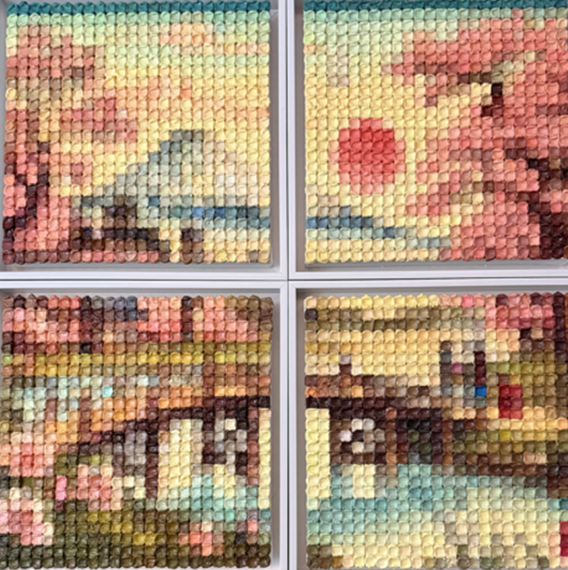
His artwork, Along the River During the Qingming Festival, a reinterpretation of the famous handscroll painting by the same name, utilizing STONECUBE, entered institutional collections in New York.
Flow-music practice merges with painting, extending STONECUBE into sound and temporality.
首次将创作语言正式命名为“石村块 STONECUBE”,标志着该语言体系的确立。
《清明上河图》被纽约中国工商银行总部收藏。
心流音乐实践与绘画融合,语言体系扩展至声音与时间维度。
Shi creates four flow-music compositions that were featured in a short film called A Poet on the Cruise, which received the Best Documentary Short award at the Nashik Asha International Film Festival.
The soundtrack, his flow music, was described by critics as a work of profound intuitive resonance.
诗歌音乐电影短片《A Poet on the Cruise》采用四首心流音乐为主旋律,获 Nashik Asha 国际电影节最佳纪录短片奖。原声音乐被称为“大师之作”。
Using the STONECUBE system, Shi reimagines Visiting the Yangtai Daoist Temple, the only surviving manuscript attributed to Li Bai, as a cross-civilizational structural experiment. The work, titled Li Bai’s Visiting the Yangtai Daoist Temple, translates the original calligraphy’s sense of time and rhythm into the energy units, demonstrating STONECUBE’s capacity to interpret and reconstruct visual systems across cultures.
以石村块系统重构李白唯一存世书法《上阳台帖》,展开一次跨文明的结构实验。原作的笔势与时间性被转译为色块化的能量单位,显示石村块对不同文化视觉系统的解析与重建能力。
The documentary From Stone to Stone, based on the STONECUBE work Pollock’s Stone, received awards at film festivals in Berlin and Munich.
Shi presented a live performance of poetry × flow-music at the Guggenheim Museum.
基于石村块作品《波洛克的石头》拍摄的纪录短片《From Stone to Stone》获柏林与慕尼黑电影节奖项。
于古根海姆美术馆进行诗歌 × 心流音乐现场演出。