Tue - Sun : 12pm - 5pm

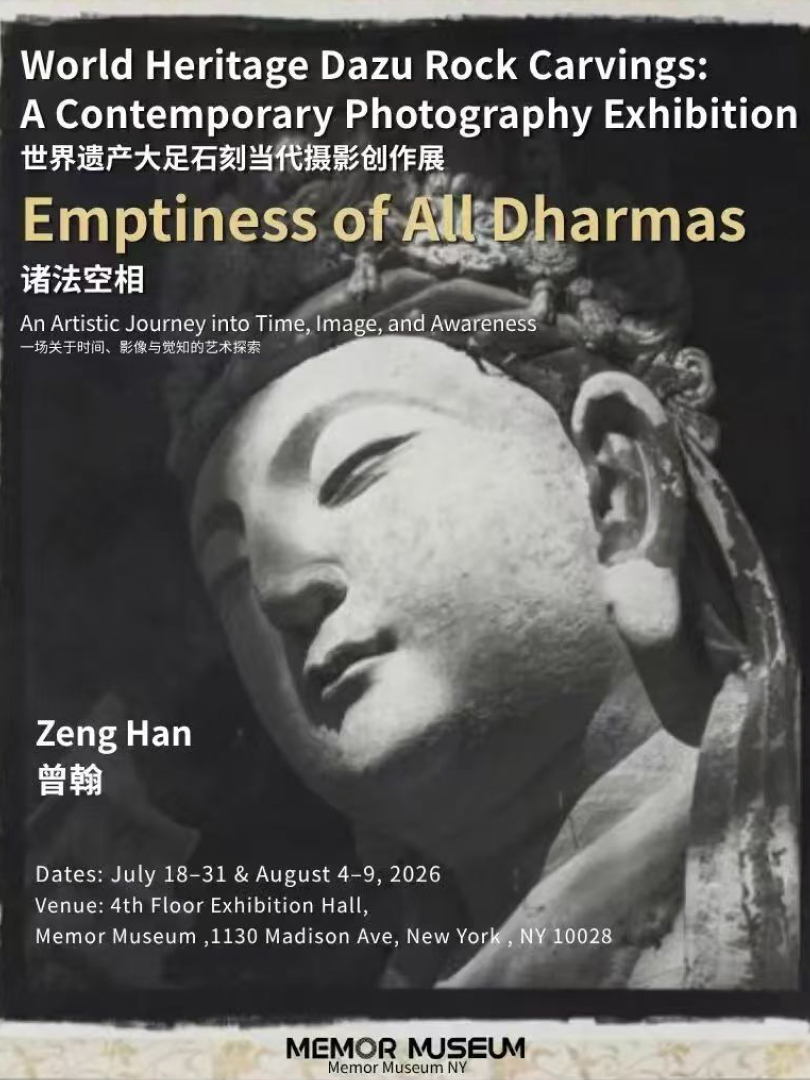
Photography transforms the Dazu Rock Carvings into contemplative images where Buddhist form, material tradition, and perception meet.
Aug 5, 2026
-
Aug 30, 2026
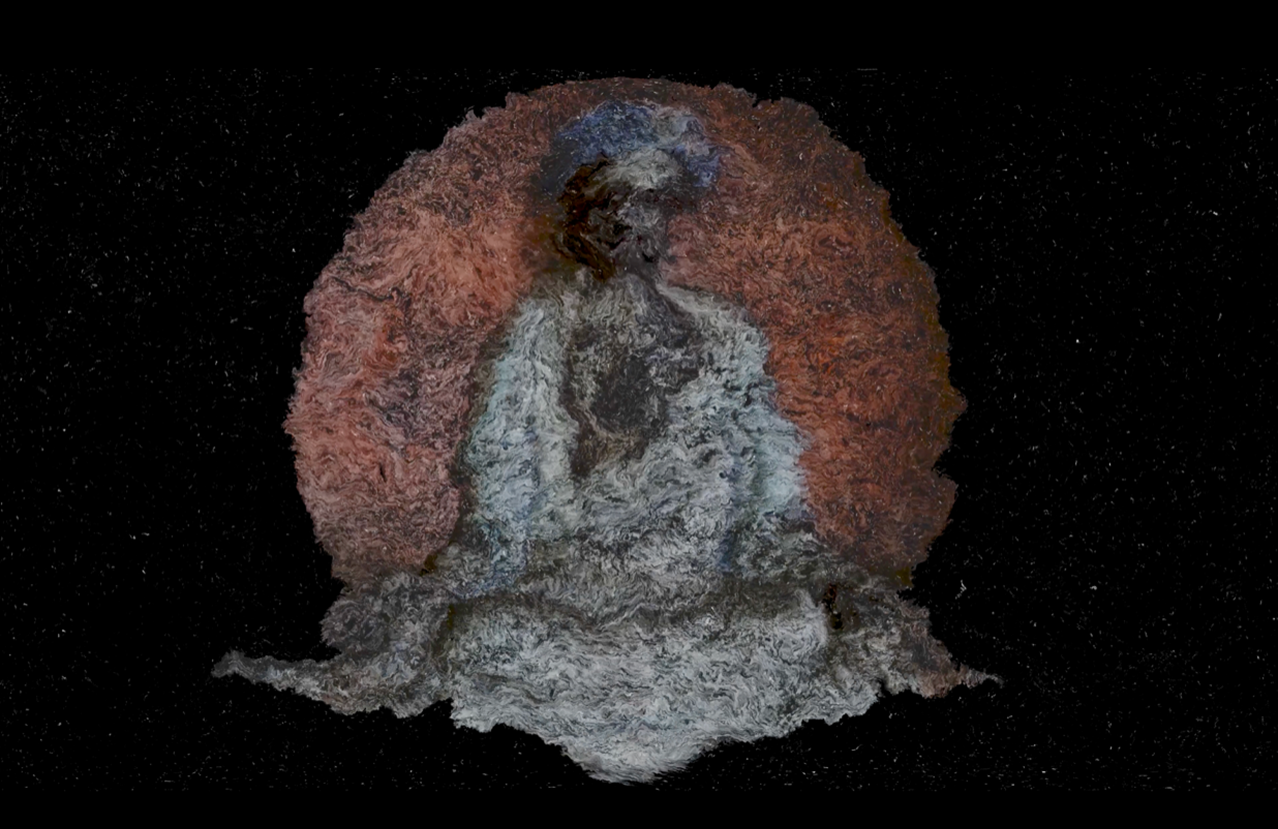
The Characteristics of Dharmas series was photographed at the Dazu Rock Carvings in Chongqing, one of the most significant monuments of Chinese Buddhist art. Created between the late Tang and Southern Song dynasties, the Dazu grottoes embody a remarkable synthesis of Buddhist philosophy, indigenous Chinese aesthetics, and vernacular religious culture. Unlike the transcendent iconography found in many earlier Buddhist sites, the figures at Dazu possess an unmistakable human presence—their expressions serene, compassionate, and imbued with an intimate spirituality that brings the sacred into everyday life.
The title, The Characteristics of Dharmas, is drawn from the Buddhist concept of 法相, a term that extends far beyond the physical appearance of Buddhist images. In Buddhist philosophy, dharma-lakṣaṇa refers to the characteristics or manifestations of all phenomena—the ways in which reality appears through dependent origination while remaining fundamentally empty of fixed essence. Form is neither absolute nor permanent; every appearance is both a manifestation of reality and a reminder of its impermanence. Rather than documenting the stone sculptures as historical artifacts, this body of work employs photography as a contemporary medium through which to reconsider the relationship between appearance and reality, visibility and invisibility, materiality and spiritual presence.
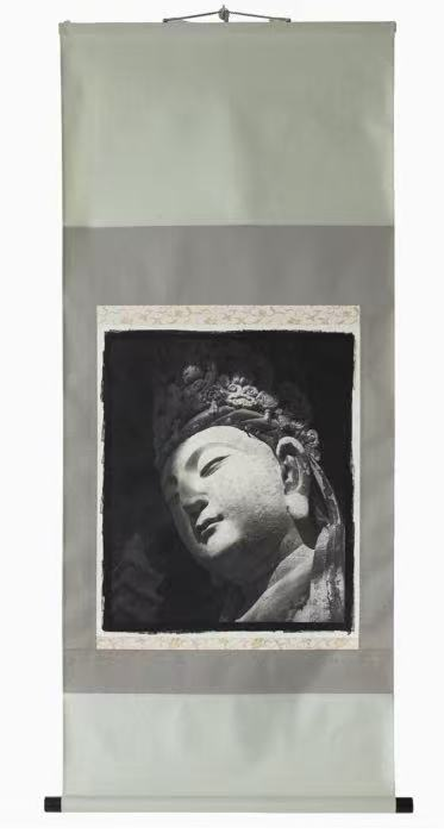
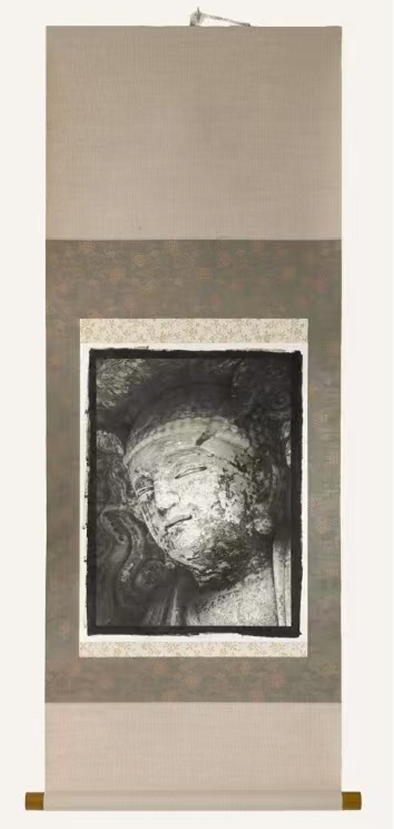
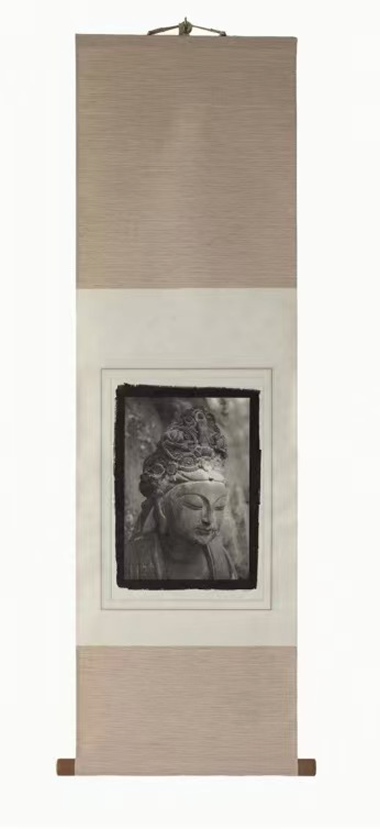
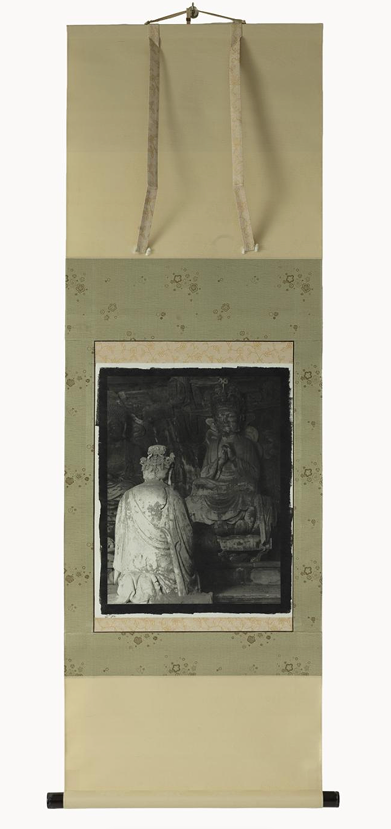
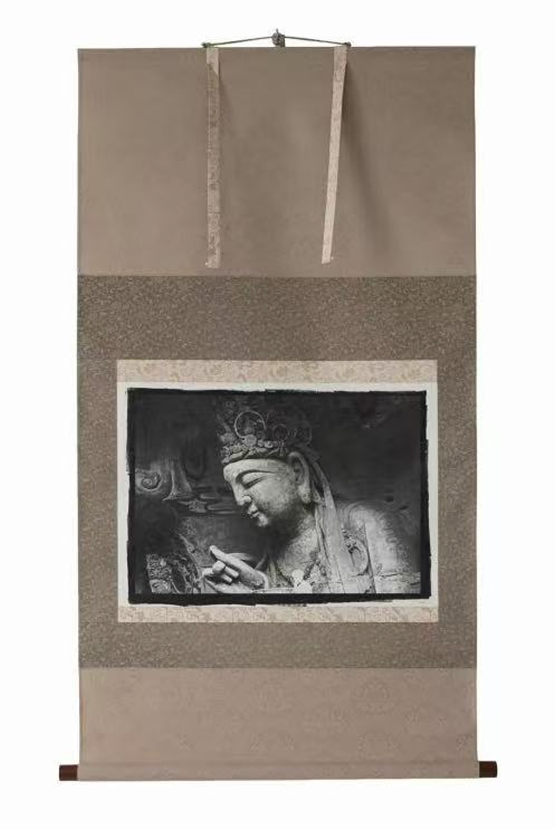
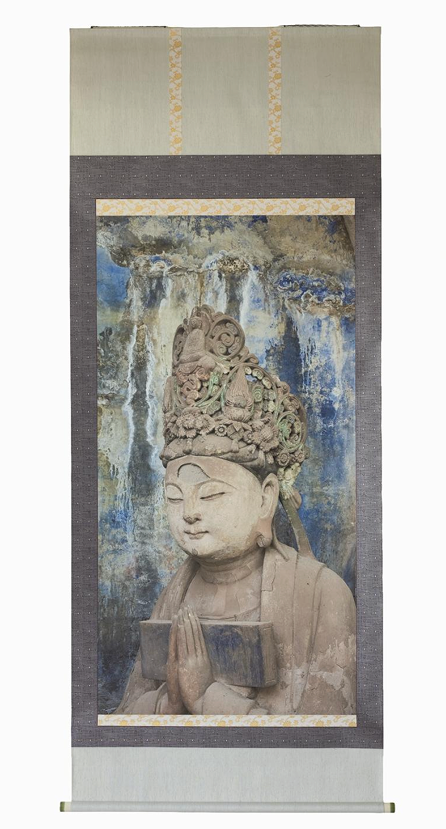
The material construction of the work is integral to its conceptual framework. The color photographs are produced as archival pigment prints on fine silk, whose subtle translucency and luminous surface evoke the tactile and visual qualities of traditional East Asian painting and Buddhist devotional images. The black-and-white works are realized as platinum/palladium prints on handmade Chinese Chupi (paper mulberry) paper. Revered as one of photography's most enduring nineteenth-century printing processes, platinum printing offers extraordinary tonal depth, permanence, and delicacy, while the organic texture of handmade fiber paper lends each image a contemplative material presence.
Each work is finally mounted according to the traditional Chinese art of scroll mounting and presented on antique Japanese hanging scrolls. The scroll is not merely a display format but a temporal and meditative mode of viewing. It establishes a dialogue between Chinese mounting traditions, Japanese craftsmanship, and the photographic image, allowing photography to move beyond the conventions of the modern gallery wall and re-enter the unfolding spatial and temporal experience of the East Asian handscroll and hanging scroll tradition. Photography, historical processes, silk, handmade paper, and antique scrolls converge here as layered cultural materials, generating a new visual and historical context.
Dharma-Lakṣaṇa ultimately seeks to transcend photography's conventional role as an instrument of representation, transforming the photographic image into a vehicle for contemplation. Through successive acts of translation—from stone to light, from photograph to platinum print and silk, from paper to scroll—the ancient Buddhist sculptures are released from the realm of archaeological documentation and reimagined as sites where time, memory, and perception continually intersect. What confronts the viewer is not simply the image of a Buddha, but a mirror in which one's own consciousness is reflected. The "form" that is seen is inseparable from the mind that perceives it. In this sense, Dharma-Lakṣaṇa does not reside in the sculptures themselves, but emerges within the act of seeing, where every appearance continuously arises, transforms, and disappears.