Tour Guide
Loong
石村 Stone Chun Shi
Loong
Year:
2019
Size:
48 in × 48 in
Size:
48 in × 48 in
Material:
Oil on canvas
Material:
Oil on canvas
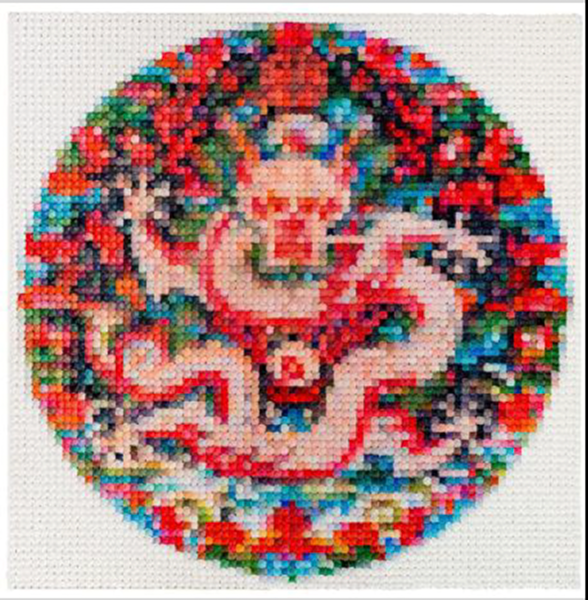
In Loong, Stone Chun Shi reinterprets the imperial dragon motif from the Qing dynasty royal robe, transforming the most potent emblem of Chinese civilization into a visual field of energy and consciousness. Unlike the Western “dragon,” the Loong in Chinese culture symbolizes wisdom, balance, and cosmic vitality —a being of benevolence rather than aggression.Through his original Stonecube technique, Shi disassembles this ancient totem into thousands of chromatic cubes, each functioning as a pulse of spiritual energy. The imperial symbol of authority thus dissolves into color, rhythm, and vibration —its once-hierarchical power transfigured into inner illumination. For Shi, Loong marks a turning point: the transition from political sovereignty to spiritual sovereignty, from external power to internal awareness. Here, the dragon’s divine mandate becomes a metaphor for awakening —a universal force that flows through all living energy.
《龙》取材自清代皇帝龙袍上的“龙纹”图案——这是中国文化中象征天命与王权的最高符号。石村以其独创的“石村块(Stonecube)”艺术语言,将这一皇权图腾转化为能量与意识的共振场。不同于西方的“dragon”象征征服与暴烈,中文的“Loong”代表祥和、觉知与宇宙生机。在画面中,帝王的威严被解构为数以千计的色彩微块,每一块皆为精神的细胞,在律动中呼吸与闪烁。那象征权 势的龙,在此不再高悬于天,而化为能量的漩涡,象征从外在统治到内在觉醒的转化。石村以“Loong”重释东方的精神主权,让“天命”从帝王之手,回归万物的生命之光。