Tour Guide
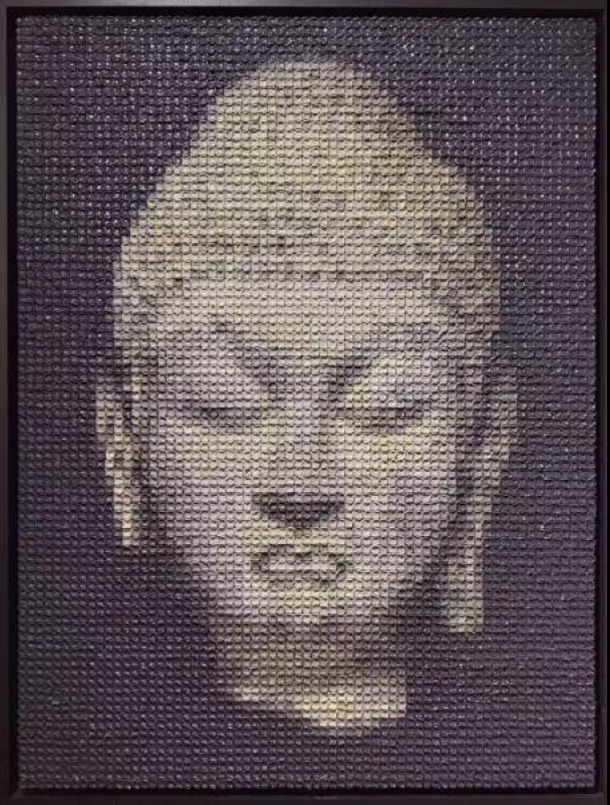
Longmen Caves 1720
石村 Stone Chun Shi
Longmen Caves 1720
Year:
2025
Size:
43.5 in × 57.6 in
Size:
43.5 in × 57.6 in
Material:
Oil on canvas, Stonecube technique
Material:
Oil on canvas, Stonecube technique
In the Longmen Caves, Stone Chun Shi reimagines one of the most significant monuments ofChinese civilization through his unique Stonecube language — a visual system born from thestructure of Chinese calligraphy and the philosophy of energy as form.The work does not depict the grottoes directly; instead, it channels their spiritual vibration.Thousands of micro-cubes emerge from darkness and light, creating a chromatic field where stone breathes, and consciousness flows.The title “1720” is not a historical number but anenergy frequency — the vibration of devotion carved into time.This painting is part of Stone’s ongoing exploration of how ancient sacred spaces can be reactivated through contemporary abstraction. By transforming the meditative rhythm of calligraphic strokes into color blocks, he fuses Buddhist silence, architectural order, and living energy, bridging the spiritual pulse of the past with the consciousness of the present.
在《龙门石窟 1720》中,石村以其独创的石村块(Stonecube)艺术语言,重释中国文明的精神象征。作品并非再现石窟形貌,而是转译其内在的能量震动。画面由无数微型“块”构成,它们在光与暗之间呼吸流动,如同能量的符文。题中的“1720”并非年代 ,而是一种能量频率,象征信仰在时空中的共振。这幅作品延续石村对于“古代圣性空间的当代表达”之探索——将书法笔触的气韵化为色块的秩序,在冥想的节奏中融合佛性的寂静与现代的意识能量,使“石”成为精神的容器,让时间重新发光。