Tour Guide
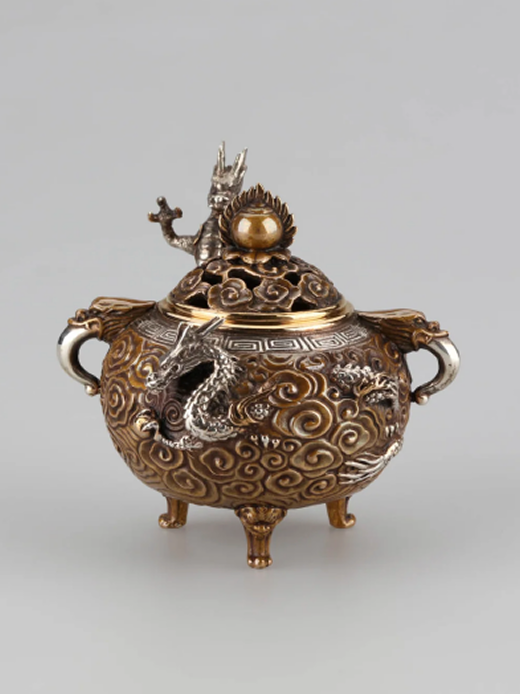
Incense Burner with Dragon, Clouds, and Sacred Jewel
Yotsukawa 四津川
Year:
1940s
Size:
Material:
This intricately decorated incense burner, made by Yotsukawa in 1946, exemplifies the superb skill of Japanese traditional metalwork. The body is encircled by two lifelike, powerful dragons vying for a sacred jewel amidst swirling auspicious clouds, exuding dynamic energy. In Japanese culture, dragons symbolize wisdom, authority, and good fortune, often representing spiritual ascension and compassionate protection. Buddhism, transmitted from China to Japan during the Asuka period (538-710 CE), gradually became localized, giving rise to numerous legends and motifs, including the twin dragons. An ascending dragon (nobori-ryu) signifies enlightenment, wisdom, and good fortune, while a descending dragon (kudari-ryu) symbolizes compassion, protection, and purification. Yotsukawa's artisans have condensed profound cultural meaning into this classic piece through extremely meticulous craftsmanship.
この紋様が入り組んだ香炉は、四津川によって1946年に製作され、日本の伝統的金属工芸の卓越した技術を示している。胴部には、瑞雲がたなびく中で宝珠を争う、二体の生き生きと力強い龍が巡らされ、霊動な気迫を放っている。日本文化において、龍は知恵、権威、福運を象徴し、精神の昇華と慈悲の守護を表すことが多い。仏教は飛鳥時代(538-710)に中国から日本に伝来し、次第に土着化し、双龍など多くの伝説や文様を生み出した。昇り龍は開悟、智慧、吉祥を意味し、降り龍は慈悲、守護、浄化を象徴する。四津川の匠は極めて緻密な技術で、深い文化的寓意をこの古典的な作品に凝縮している。
这款纹饰繁复的香炉由四津川于 1946 年制作,展现日本传统金属工艺的精湛造诣。炉身环绕着两条栩栩如生、姿态矫健的龙,于祥云缭绕之中争夺宝珠,气势灵动。在日本文化中,龙象征智慧、权威与福运,常代表精神升华与慈悲守护。佛教于飞鸟时代(538–710)由中国传入日本,逐渐本土化,并衍生出双龙等诸多传说与纹样。升龙寓意开悟、智慧与吉祥,降龙象征慈悲、守护与净化。四津川匠人以极致细腻的工艺,将深厚的文化寓意凝于这件经典作品之中。