Tour Guide
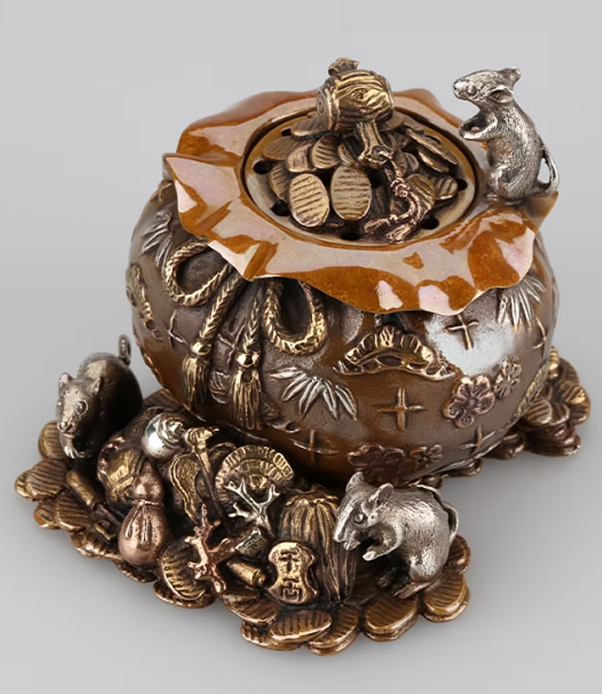
Incense Burner with Auspicious Mice and Koban Coins
Yotsukawa 四津川
Year:
1940s
Size:
Material:
This bronze incense burner, masterfully crafted by Yotsukawa artisans in 1946, features finely sculpted mice scampering over a detailed mound of koban (oval gold coins), symbols deeply rooted in Japanese culture. The mouse, known for adaptability and prolific reproduction, is traditionally revered in Japan as an auspicious symbol of prosperity, abundance, and resourcefulness. Significantly, mice are considered sacred messengers of Daikokuten, one of Japan's Seven Lucky Gods, who presides over commerce, agriculture, prosperity, and the household. Daikokuten's association with mice stems from complex Buddhist traditions linking him to wealth-related deities such as Bishamonten and Pañcika, aligned with the northern direction and the Rat of the Chinese zodiac. Through meticulous metalworking techniques and rich symbolism, this artwork eloquently embodies cultural narratives of wealth, fortune, and enduring prosperity.
この青铜製香炉は、四津川の工匠によって1946年に精緻に鋳造された。香炉には、精巧に彫刻された鼠が、詳細に作られた小判の山の上で戯れる様子が表されており、これらの要素は日本文化において深い寓意を持つ。鼠はその適応力と繁殖力で知られ、日本では伝統的に繁栄、富足、機知を予兆する瑞兆として尊ばれている。特に重要なのは、鼠が七福神の一柱である大黒天の神使とされていることである。大黒天は商業、農業、富、家庭を司る。大黒天と鼠の関連は複雑な仏教的伝統に由来し、彼を毘沙門天や般闍迦などの財宝に関わる神々と結びつけ、北方の方角や十二支の子(鼠)と対応させている。緻密な金属加工技術と豊かな象徴性を通して、この作品は富、幸運、そして長く続く繁栄についての文化的物語を雄弁に体現している。
这件青铜香炉由四津川的工匠于1946年精工铸造,香炉上精巧地雕刻着老鼠在一堆细致的小判(椭圆形金币)上嬉戏的场景,这些元素在日本文化中寓意深远。老鼠以其适应力和繁衍力著称,在日本传统中被视为预示繁荣、富足与机智的祥瑞之物。尤为重要的是,老鼠被认为是七福神之一——大黑天的神使。大黑天主司商业、农业、财富与家庭。大黑天与老鼠的关联源于复杂的佛教传统,将他与毗沙门天、般闍迦等财宝之神相联系,并与北方方位及十二生肖中的鼠相契合。
通过精湛的金属加工技法和丰富的象征意义,这件作品生动地诠释了关于财富、好运和长久繁荣的文化叙事。